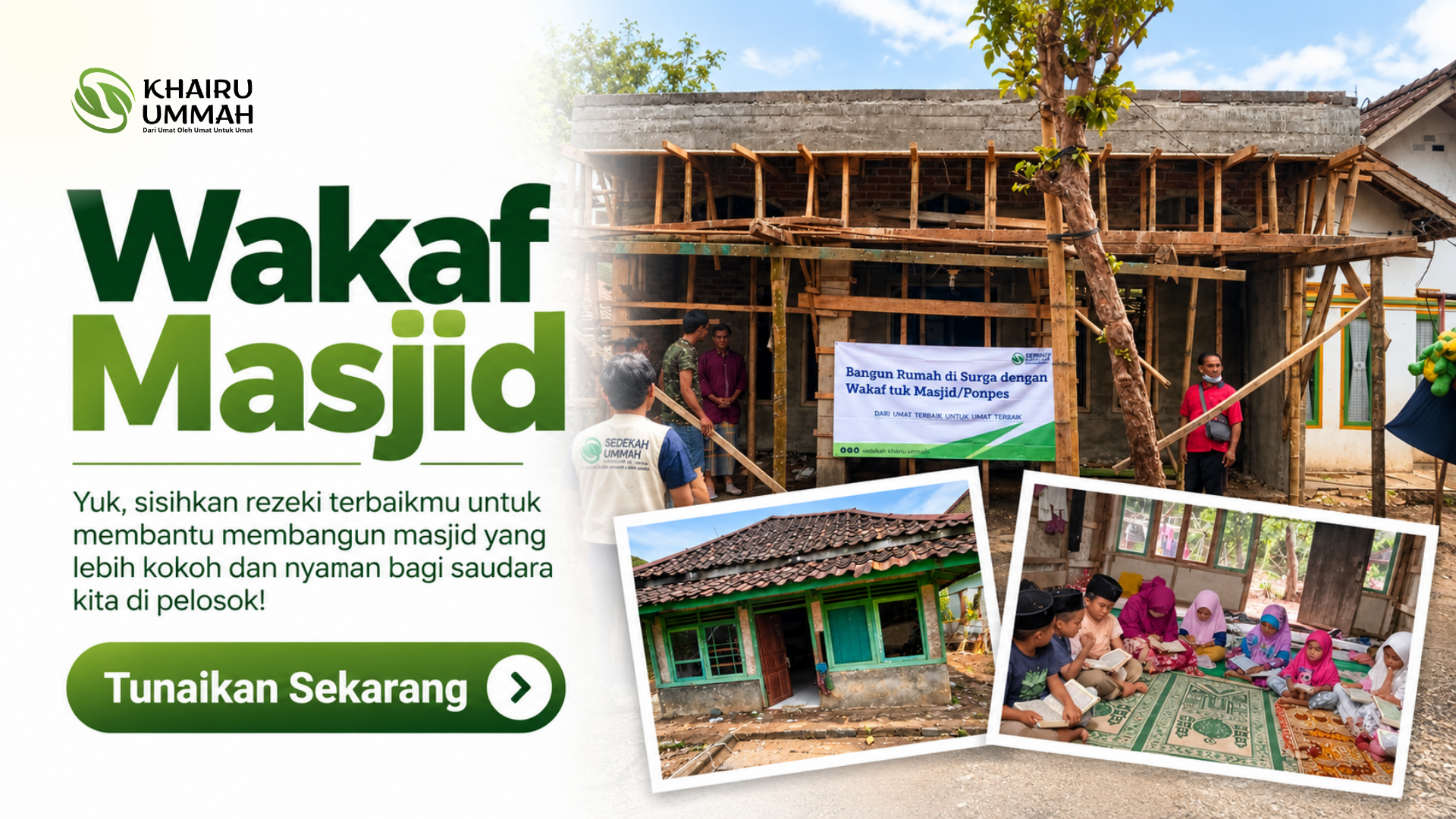
For urban residents, worshipping inside grand domed mosques with cool marble floors is an everyday convenience. But for dozens of families in remote villages, possessing sturdy brick walls capable of repelling mountain winds remains a prayer uttered during every prostration.
One such sanctuary is Masjid Baitul Muminin. The simple structure was erected from woven bamboo slats that are now rotting and hollowed by termites. Gaps in the walls allow biting mountain drafts to enter during morning and evening prayers. When tropical storms hit, water seeps through, soaking the floors and woven carpets.
"A village mosque is far more than a space for five daily prayers. It is the community assembly hall, the classroom where children spell their first Quranic letters, and the moral center of rural youth."
Building From Foundations: Resilient, Clean, and Dignified
Confronting these urgent conditions, Yayasan Sedekah Khairu Ummah mobilized the Rural Mosque Waqf Program with measurable construction deliverables:
- 1. Permanent Structural Masonry: Replacing dilapidated bamboo panels with reinforced brick walls, lightweight steel trusses, and easy-to-clean ceramic tiling.
- 2. Clean Ablution & Sanitation Facilities: Installing hygienic wash stations, deep well clean-water reservoirs, and sanitary toilets for congregants.
- 3. Youth Learning Corners: Setting aside dedicated spaces with clean carpets, low wooden desks, and scripture racks for afternoon Quranic studies.
Enduring Perpetual Value
Physical endowment (waqf) initiatives carry lasting generational impact. Every brick placed, every drop of clean water used for purification, and every quiet prayer whispered inside creates an enduring current of shared public benefit.
Statutory Verification & Editorial Oversight
This program is officially registered under Yayasan Sedekah Khairu Ummah (Ministry of Law Decree: AHU-0007160.AH.01.04.Tahun 2022, Business ID NIB: 1102230011419). Philanthrōpos records this initiative independently without deducting donor contributions.